Pre-Project Technical Support
- Assessment of high-temperature gas conditions (180–260°C)
- Chemistry evaluation to determine P84 purity vs blends
- Filtration efficiency & pressure-drop performance prediction
- Trial P84 bags for real-world validation
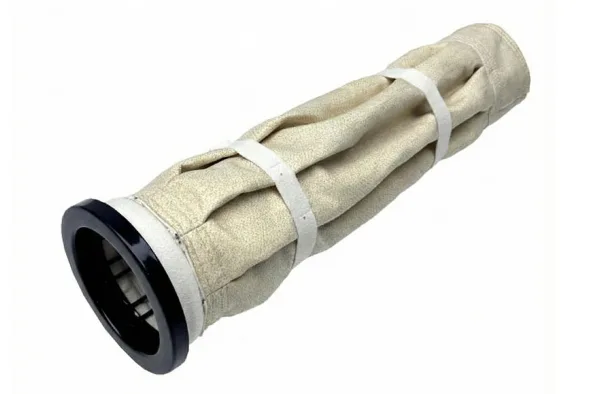
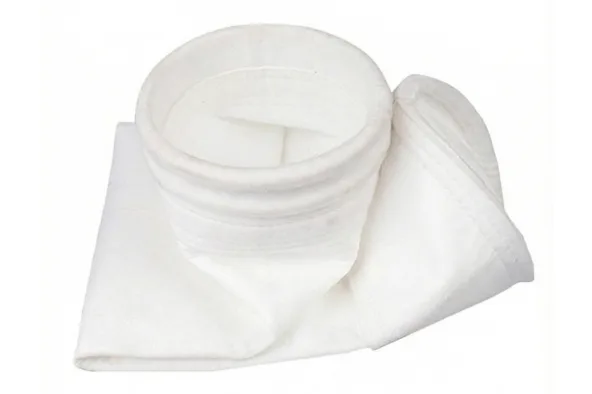
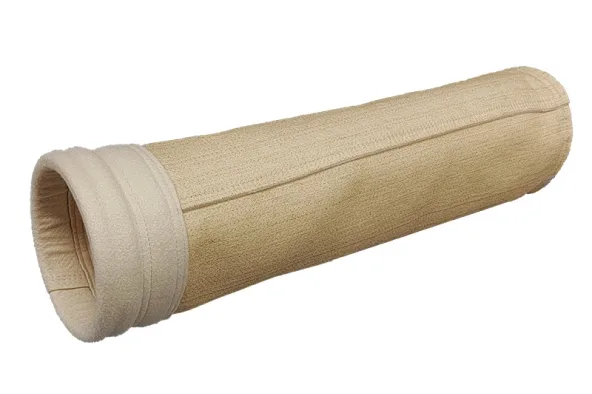
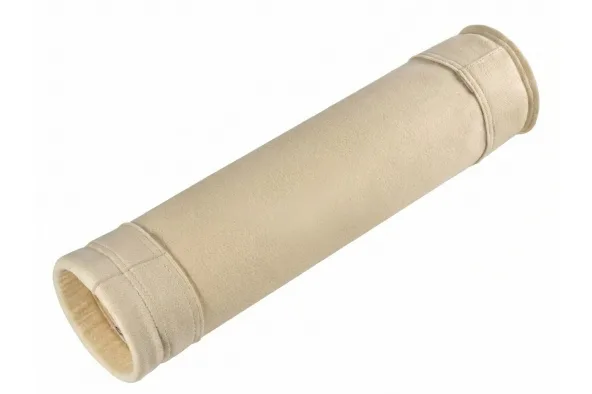
P84 High-Temperature Dust Filter Bag
P84 filter bags are high-temperature pulse-jet bags made from P84 polyimide needle felt. The fibre has a unique multi-lobed cross-section and an aromatic backbone, providing excellent thermal and chemical stability for demanding industrial flue gas filtration. Compared with conventional round fibres, P84 captures more fine dust on the surface layer and keeps the baghouse running with low and stable pressure drop throughout its service life.
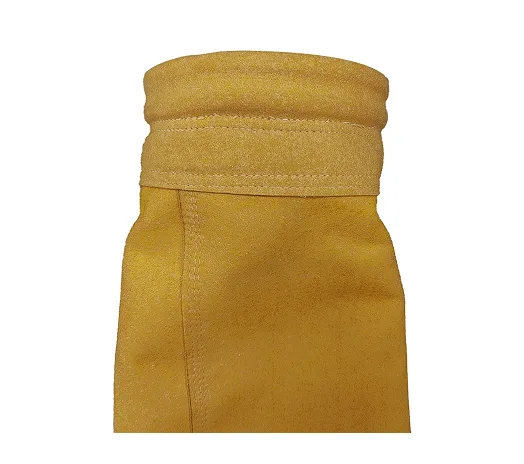
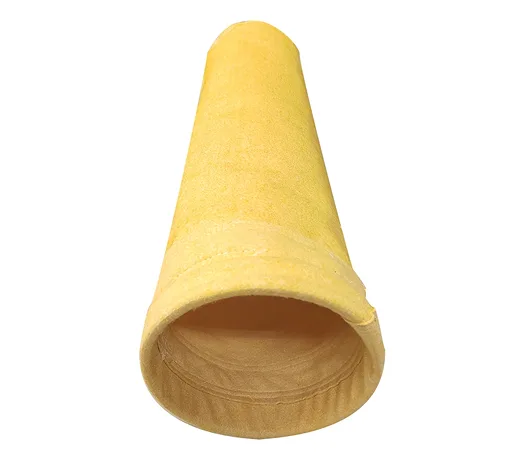
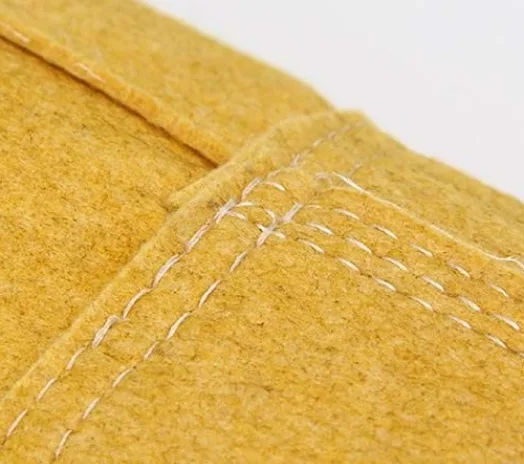
The multi-lobed fibre shape generates a very high specific surface area. More “low-velocity” zones are created around each fibre, which significantly increases the probability of fine particles being captured in the outer dust cake instead of penetrating into the felt structure.
P84 fibres are thermally stable up to 260 °C peak temperature, with a glass transition temperature around 315 °C and decomposition only starting above 450 °C. This makes P84 suitable for demanding applications such as kiln exhaust, boilers and metallurgical furnaces.
P84 offers good resistance to many common industrial chemicals, including acids, solvents, oils and fuels, and has excellent hydrolysis stability even at 170 °C and 50 % moisture, outperforming many m-aramid felts in long-term tensile strength retention.
Due to low dust penetration, reduced internal abrasion and stable residual pressure drop, P84 bags typically run longer between change-outs, lowering bag consumption, maintenance labour and unplanned shutdowns.
P84 has a limiting oxygen index (LOI) of about 38 %, and its halogen-free structure avoids formation of corrosive or toxic halogenated gases during a baghouse fire or disposal.
In more than 500 industrial plants worldwide, reference baghouses equipped with P84 filter bags have demonstrated significant energy savings and reduced fan power consumption, contributing to an estimated reduction of ~120 000 t of CO₂ emissions per year.
| ITEM | OM–P84–240N | OM–P84–240E |
|---|---|---|
| Working temperature (°C) | 240 | 240 |
| Peak temperature (°C) | 260 | 260 |
| Emission (mg) | / | / |
| Weight (g/m²) | 550±5% | 550±5% |
| Thickness (mm) | 2.8±10% | 2.8±10% |
| Air permeability (m³/m²/min) | 20±20% | 16±20% |
| Tensile strength / warp | ≥900 | ≥900 |
| Tensile strength / weft | ≥1200 | ≥1200 |
| Tensile elongation / warp | ≤25 | ≤25 |
| Tensile elongation / weft | ≤50 | ≤50 |
| 24–hour heat shrink / warp | ≤1.5 | ≤1.5 |
| 24–hour heat shrink / weft | ≤1.0 | ≤1.0 |
| Post–processing | Heat Setting / Singeing / Calendering / PTFE Dipping / PTFE Membrane | |
Exceptional fine-particle capture in high-temperature applications.
Reduced resistance results in lower energy consumption.
P84 Dust Filter Bags are widely used in critical applications such as cement kiln exhaust, clinker coolers, steel and non-ferrous metallurgy furnaces, waste-to-energy incinerators, biomass boilers, and chemical process filtration where continuous temperatures typically reach 240°C.

These filters benefit from excellent surface filtration, resistance to alkalis and stable operation when switching between direct and compound mode or when using high levels of alternative fuels

In coal and biomass-fired boilers, P84 helps maintain low emissions and stable Δp under fluctuating boiler loads, high unburnt hydrocarbons and temperature swings. It can be used in main bag filters, in combination with desulphurisation systems, or in dry sorption units.

P84 filter bags are widely used in semi-dry and conditioned dry sorption systems as well as in two-stage wet scrubbing plants, where they provide low dust emissions and maintain a low pressure drop despite variable fuel composition.
Choosing the right filtration supplier affects everything from system stability to maintenance downtime. At Omela Filtration, we combine reliable materials, controlled production, and years of industry experience to support dust and liquid filtration needs across different plants and applications.
We use consistent-grade filter media, sewing thread and metals sourced from qualified suppliers. Each batch is checked for weight, thickness, air permeability and tensile strength to keep performance steady across shipments.
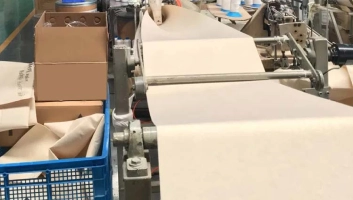
Our facility is equipped with modern sewing lines, hot-welding machines and automated inspection tools. This keeps production efficient and helps us meet tight delivery schedules, even on custom orders.
Our engineers and technicians have long experience with dust collectors, liquid systems and industry-specific conditions. They help you match materials to temperature, chemistry and air-to-cloth ratios to avoid unnecessary failures.
From sampling to documentation and shipping, our team responds quickly and keeps information clear. Customers in cement, asphalt, power and water-treatment plants rely on our service to resolve problems without delay.
From the first technical discussion to installation and long-term maintenance, our team stays involved at every stage. We analyze your operating conditions, adjust product designs when needed, and ensure the final filtration setup works reliably in real plant environments. After delivery, our service team continues to provide guidance and troubleshooting support, helping you keep your system stable and downtime low.





With 20+ years of experience and 1000+ global clients, we deliver stable filtration performance and dependable dust-collector operation.